How to Choose a Falling Film Distillation System: Is It the Right Fit for Your Feed?
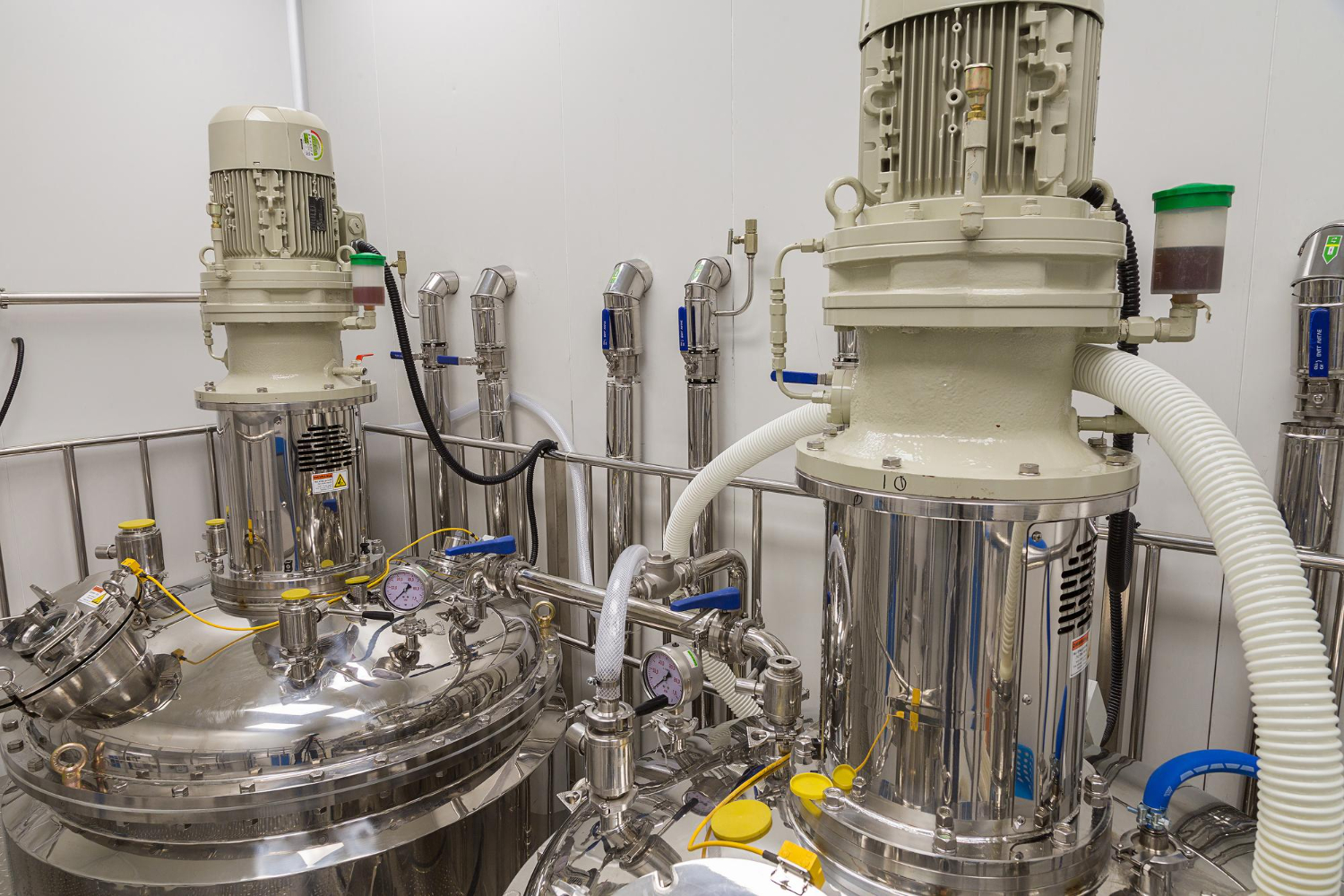
A falling film distillation system is usually the right fit when the job is removing a large volume of volatile liquid from a feed that flows freely and doing it continuously. Typical examples are solvent recovery, removing volatile organics, and concentrating liquids. It is usually a weaker fit when the target is a high-boiling, heat-fragile fraction that needs a very deep vacuum, or when volumes are too small to keep a large evaporator busy.
Our falling film distillation systems pass a thin film of liquid over a heated surface so the volatile components evaporate and the non-volatile components remain. The design pairs a falling film first stage with a second-stage rolling film evaporator. The first stage handles the bulk of the evaporation, and the second finishes the concentration.
Quick Fit Check
| Good fit | Needs evaluation | Consider another technology |
| A large share of the feed is volatile liquid to be removed or recovered | The feed gets much thicker as it concentrates | The main goal is separating a high-boiling, thermally fragile fraction that needs a deep vacuum |
| The process runs continuously at meaningful volume | The feed contains suspended solids or components that can deposit on heated surfaces | Volumes are small or runs are occasional |
| The feed flows freely at the operating temperature | The product degrades near the temperature the evaporation requires | The main challenge is finishing a thick, concentrated residue rather than removing bulk liquid |
| Recovery value or avoided disposal cost can justify the energy and equipment cost | Feed composition varies widely between batches | The separation is between components with close boiling points |
The sections below explain how to place your own process in one of these columns.
Start With What You’re Removing
The most useful first number is the share of the feed that needs to evaporate. If most of the volume is solvent or another volatile liquid, and the goal is to recover that liquid or reduce the volume, falling film’s high-volume, continuous design is doing what it is meant to do. We lists volatile organic removal, solvent recovery, fruit juice concentration, and essential oil production among the applications.
If the evaporation load is small and the real difficulty is what remains afterward, such as a thick residue or a fragile high-boiling product, the evaporator that finishes the job matters more than the one that removes the bulk. In that case, compare it with rolled film distillation systems, which we at Chemtech position for larger batches and continuous feed with a larger condenser area, or with short path distillation systems if the product needs a deeper vacuum.
Follow the Viscosity to the End of the Run
A falling film evaporator needs the liquid to form and keep a film, so viscosity at the end of the run matters more than viscosity at the start.
As volatile components leave, the remaining liquid gets more concentrated and usually thicker. A feed that flows like water at the inlet can behave very differently at the outlet. Measure or estimate viscosity at the final target concentration and at the operating temperature.
We note that falling film can handle viscous liquids and other methods cannot. The falling film and rolling film pairing exists for this reason: the first stage does the fast, high-volume evaporation, and the rolling film stage deals with the more concentrated, thicker liquid. Even so, “can handle viscous liquids” is a reason to test a difficult feed, not a guarantee for every feed.
Look for Solids and Deposit-Forming Components
Our experts state that falling film distillation can purify liquids with suspended solids. That fits high-volume waste and contaminated liquid streams. Even so, solids and components that deposit on heated surfaces are the most common reason a system that starts well needs more frequent cleaning later.
Before deciding, list what could deposit as the feed concentrates: solids already in the feed, salts, polymers, heavy residues, or anything that comes out of solution as the solvent leaves. Concentration at the end of the run is again the deciding point, not the feed as delivered.
Check the Temperature Against the Product
At Chemtech Services Inc, we describe falling film as operating at lower temperatures and suitable for heat-sensitive compounds. The practical check is whether the temperature needed for your target evaporation, at the vacuum the system can achieve, stays within the product’s tolerance.
If the answer is yes, falling film remains a strong candidate. If the product starts to degrade at the temperature the evaporation requires, look at a technology built for a deeper vacuum before going further.
Weigh the Costs Chemtech Itself Lists
Our own pros and cons for falling film include two cost-related cons: it requires a large amount of energy to operate, and equipment and installation have a high initial cost.
That points to a simple payback question. Estimate the volume of liquid you process, how often, and what recovering it (or avoiding its disposal) is worth. High-volume, frequent, valuable recovery justifies the investment far more easily than occasional runs. The existing article on the benefits of solvent recovery covers the economics of that side in more detail.
Scale is also a practical constraint. Our published FFE Series lists one configuration, the FFE200 + RF50 rated at 400 L/hr, so falling film is aimed at high-volume work. Smaller operations should compare it against the smaller rolled film and short path units before assuming falling film is the better route.
What to Have Ready Before Asking for a Recommendation
A manufacturer can assess fit faster if you bring:
- What is in the feed and what needs to be removed
- Volume per run or per hour, and how often you run
- Starting and target concentration
- Viscosity at the final concentration, if known
- Any solids, salts, or heavy components
- The temperature limit for the product
- What happens to the recovered liquid and the concentrate afterward
With this in hand, a conversation with Chemtech about a solvent recovery or falling film configuration can move straight to fit and sizing.
Frequently Asked Questions
Can falling film separate components with close boiling points?
Falling film as separating volatile from non-volatile components. Separating components with similar boiling points is a different problem, usually handled with fractionation equipment. Raise it with a manufacturer early if your separation depends on it.
What if my feed composition varies between batches?
Our experts lists significant changes in feed composition as something that may require process adjustments. Give the manufacturer the full range of compositions you expect, not just an average, so the configuration can be checked against the hardest case.
Does a feed that foams or forms emulsions rule out falling film?
Not necessarily. Our team of experts lists low foam risk among falling film’s advantages and says it can separate emulsions without destroying their structure, because of low shear. Foaming and emulsions still vary by material, so a feed that has caused foaming problems elsewhere deserves a specific mention when you ask.
Should I size for today’s volume or for expected growth?
Ask the manufacturer to check both. A system sized only for today’s volume can become a limit as you grow, while an oversized system may run below its intended conditions. Give them your current volume and a realistic projection.
Tags: Chemical Distillation System, Distillation System Manufacturer